Thursday, February 8, 2018

Tata H5X SUV officially unveiled: Auto Expo 2018 Live

Tata Motors has just unveiled the H5X SUV at the Auto Expo. The H5X is the name of the SUV concept that Tata Motors will put into production next year. The SUV is meant to be Tata Motors’ Hyundai Creta competitor. It will be positioned in the compact SUV segment in India, and will offer 5 seats. In concept form, the H5X looks absolutely gorgeous, and is easily one of the best looking cars shown at this edition of the Auto Expo.


The H5X is based on Tata Motors’ latest Impact 2.0 design philosophy, and features sharp styling cues never seen before in any Tata SUV. While the concept shows more than a few exaggerated lines, the production version is expected to be mildly toned down.
However, the production version of the H5X, which is also expected to get a new name, is likely to retain the overall look of the concept model.
The H5X will be market-launched early next year, and the SUV uses the Land Rover LS550 platform. The Fiat Multijet turbocharged diesel engine with a 2 liter displacement and power outputs of 140 Bhp-320 Nm has been earmarked for this SUV. However, details of a petrol engine are not known at the moment. The diesel engine will get 6 speed manual and 9 speed ZF-sourced automatic gearboxes. A four wheel drive layout is also expected to be offered.
There will be a larger, 7 seat SUV also based on the same platform. The larger SUV is expected to be launched only in 2020 though. The interiors of the H5X also show a minimalist, classy design.
Apart from the typical T shaped steering wheel common to most Tata cars and SUVs, the H5X shows wood and piano finish for the dashboard. There is a floating center console that seamlessly blends into the dashboard. We expect advanced infotainment features and also a top-class, multi speaker stereo from Harman.

Sunday, February 4, 2018

Supermoon Rising


On January 31, sky watchers saw the moon looking brighter and larger when three lunar events (including a supermoon) coincided for the first time in 35 years. A supermoon is a full moon at its closest point to Earth during its orbit. The most recent supermoon was extra special because it was also a blue moon - the second full moon in a calendar month - AND a blood moon, a moon which occurs during a lunar eclipse. A lunar eclipse happens when the Earth moves between the sun and the moon, blocking sunlight from hitting the moon. As this happens, the moon takes on a reddish color, which is how it got the name "blood moon." Hope you enjoyed it, it was stunning!

Wednesday, January 31, 2018

Lunar Eclipse 2018: কোথায় প্রথম চন্দ্রগ্রহণ দেখা যাবে এবং কি পরিমাণ প্রভাবিত হবে ....


মাঘ পূর্ণিমা ২018 সালের জানুয়ারী  মাসে  প্রথম চন্দ্রগ্রহণ হবে, যা পৃথিবীর অনেক দেশ ছাড়াও ভারতেও দৃশ্যমান হবে। চাঁদ গ্রহনের সময় পৃথিবীর নিকটবর্তী হওয়য়ায়, তখন চাঁদকে একটি বড় আকারে দেখা যাবে যাকে বলা হয় সুপার মুন  জ্যোতিষীরা বলছেন যে কিছু সময় চাঁদকে লাল রঙের দেখা যাবে যেটি গ্রহীতা এবং কৃষকদের জন্য শুভ নয়।

গ্রহন শুরু হওয়ার সময় 5 -টা বেজে 18 মিনিট এবং 27 সেকেন্ড হয়। এই গ্রহন শুরু হবে ভারতের আসাম, অরুণাচল প্রদেশ, নাগাল্যান্ড, মিজোরাম, সিকিম, পশ্চিমবঙ্গে। অন্যান্য রাজ্যে চাঁদকে কেবল গ্রহনের সময় দেখা যাবে। 


কর্কট আক্রান্ত গ্রহনের কারণে পানি উপাদানটি কর্কট রাশিকে বেশিরভাগ  প্রভাবিত করবে। জল উপাদান পরিমাণে নিকাশী কারণে, অস্বাভাবিক বৃষ্টি, ঘূর্ণিঝড় বা বড় সমুদ্র তুষারপাত প্রত্যাশিত হয়।


চাঁদের পরিমাণের উপর প্রভাব দেখুন: -
মেষ: গ্রহন ফল আপনার জন্য শুভ হবে। আপনার কাজ সফল হবে। কর্মক্ষেত্রে অগ্রগতি হবে এবং সুবিধা পাওয়া যাবে।
টরাসঃ আপনার তৃতীয় ঘরে আপনার চাঁদ চন্দ্র গ্রহন আপনার ক্ষেত্রে অনেক ক্ষেত্রে আপনার জন্য উপযুক্ত হবে। টাকা কোথাও কোথাও পেতে পারেন।
মিথুন: আপনাকে ভ্রমণ করতে হতে পারে। আর্থিক বিষয়ে সচেতন থাকুন, এটি ক্ষতিগ্রস্ত হতে পারে।
কর্কট: স্বাস্থ্যের উচ্ছ্বাস ও উপসর্গগুলি মোকাবেলা করা প্রয়োজন। আপনি দুর্ঘটনা সচেতন থাকতে হবে। 
সিংহ: অর্থের পরিপ্রেক্ষিতে আপনার ক্ষতি হতে পারে। স্বাস্থ্য ক্ষতিগ্রস্ত হবে। মানসিক উদ্বেগ দ্বারা বিরক্ত করা যেতে পারে।
কন্যা: এই চন্দ্রগ্রহণ আপনার পক্ষে অনুকূল হবে। সুবিধার উপায় বৃদ্ধি হবে। অর্থ উপকৃত হবে। সৌভাগ্য পরিবারের জীবনে থাকবে।

তুলা : স্বাস্থ্যের যত্ন নিন কাজ এবং জীবনের অন্যান্য ক্ষেত্রে ক্ষেত্রের মধ্যে দ্বন্দ্ব হতে পারে। কিছুই সম্পর্কে ভয় হবে।
বৃশ্চিক: অজ্ঞানে সেখানে কিছু বিষয়ে উদ্বিগ্নতা ও উদ্বেগ থাকবে। শিশুরা কষ্ট পেতে পারে খরচ বৃদ্ধি হবে।
ধনু সম্পদ: অর্থ পাওয়া যাবে কিন্তু খরচ কমে যাবে যা সঞ্চয় কমানো হবে। আপনি সতর্ক হতে হবে, বিরোধীদের সঙ্গে বিরোধীদের
মকর: পারিবারিক জীবনের ক্ষেত্রে, এই গ্রহন ভালো ফলাফল দেখাচ্ছে না। একটি বিবাহিত জীবন মধ্যে সমন্বয় অভাব হতে পারে। বিদেশী এবং অংশীদারিত্বের কাজগুলিতে সমস্যা হতে পারে।
কুম্ভরাশি: বিরোধীদের প্রভাব বৃদ্ধি পাবে। গোপনীয় উদ্বেগ এবং সমস্যা অবিরত করতে পারেন জীবনের বিভিন্ন ক্ষেত্রে সাফল্যের জন্য সংগ্রাম হওয়া আবশ্যক।
মীন : শিক্ষার ক্ষেত্রে সমস্যা হতে পারে। ছেলেদের দিকে তাকিয়ে থাকতে পারে খরচ বৃদ্ধি হবে। কর্ম সমাপ্ত করার মধ্যে একটি বিলম্ব হতে হবে।


Thursday, January 25, 2018

Xiaomi Redmi Note 4 receives another price cut: Should you still buy it or wait for Redmi Note 5?

If there's one smartphone that has catapulted Xiaomi into becoming India's biggest smartphone brand, then it has got to be the Redmi Note 4. The largest selling smartphone of 2017 has received what could probably be its last price cut before it bids goodbye, as Xiaomi has announced a Rs 1,000 price cut on the Redmi Note 4 64GB variant.
Redmi Note 4
Xiaomi Redmi Note 4 on Mi.comMi.com
The latest price cut comes as several reports suggest the Chinese company is prepping up to launch the successor to the Redmi Note 4 - Redmi Note 5 - in India anytime soon.

Following the price cut, the Redmi Note 4 will be available for Rs 10,999 down from its regular retail price of Rs 11,999. However, the new price is applicable only on the Redmi Note 4 variant with 64GB storage and 4GB of RAM and on phones purchased via the online channels.
The Redmi Note 4 is available with the new price on Mi.comAmazon India and Flipkart.
Meanwhile, this is the second price cut that the Redmi Note 4 has received in its life cycle. The smartphone had received its first price cut back in November 2017. However, this also looks like the phone's final price cut before the Redmi Note 5 comes to replace the ageing best seller.
To recall, Redmi Note 4 was launched in January last year, in three memory configurations: 2GB RAM + 16GB storage, 3GB RAM + 32GB storage and a 4GB + 64 GB storage variant. While the 16GB storage carried a price tag of Rs 9,999, the 32GB and 64GB variants were launched at Rs 10,999 and Rs 12,999 respectively. The 16GB variant was, however, discounted after the launch of the Redmi 4.
Last year, Xiaomi toppled Samsung to become the biggest smartphone brand in India, and the Redmi Note 4 played the biggest role. The Redmi Note 4 set new records and became the fastest selling smartphone in India having sold 1 million units in less than 45 days and 5 million units within a span of six months. Xiaomi reportedly sold 9.2 million units in Q3 of 2017 and most of them were Redmi Note 4 units. 
However, recent launches like the Honor 7X and more recently the Honor 9 Lite, are making the Redmi Note 4 look outdated with upgraded specs like dual camera setups, and 18:9 displays.
Moreover, Xiaomi is expected to launch the Redmi Note 5 (most likely the Redmi 5 Plus will be rebranded as the Redmi Note 5 and sold in India) with an updated design with a larger 6-inch 18:9 display in India as early as February.
But should you still consider the Redmi Note 4?
The Redmi Note 4 certainly isn't getting any younger, but having said that it is getting cheaper. It still packs decent specifications for a sub Rs 15,000 smartphone, but there are plenty of newer options out there, like the Honor 9 Lite, which comes at the same price of Rs 10,999 but offers a fresher design and the latest Android Oreo out-of-the-box. Then, there is the Redmi Note 5, which might be launched anytime soon. The phone looks modern with that 18:9 display, yet packs the same DNA (i.e. the Snapdragon 625 chipset).
However, it all boils down to a matter of personal choice - whether you want a seasoned, time-tested smartphone with slightly older hardware, or a fairly new smartphone that comes with better specs, or wait and hold that money for the Redmi Note 5. 

Thursday, January 18, 2018

Google’s new AI can recognise objects in images

A new service, called Cloud AutoML, uses several machine-learning tricks to automatically build and train a deep-learning algorithm that can recognise things in images.
The technology is limited for now, but it could be the start of something big. Building and optimising a deep neural network algorithm normally requires a detailed understanding of the underlying math and code, as well as extensive practice tweaking the parameters of algorithms to get things just right.
The difficulty of developing AI systems has created a race to recruit talent, and it means that only big companies with deep pockets can usually afford to build their own bespoke AI algorithms.
“We need to scale AI out to more people,” Fei-Fei Li, chief scientist at Google Cloud, said ahead of the launch today. Li estimates there are at most a few thousand people worldwide with the expertise needed to build the very best deep-learning models. “But there are an estimated 21 million developers worldwide today,” she says. “We want to reach out to them all, and make AI accessible to these developers.”
Cloud computing is one of the keys to making AI more accessible. Google, Amazon, Microsoft, and other companies are rushing to add machine-learning capabilities to their cloud platforms. Google Cloud already offers many such tools, but they use pre-trained models. That limits what they can do—for example, programmers will only be able to use the tools to recognize a limited range of objects or scenes that they have already been trained to recognize. A new generation of cloud-based machine-learning tools that can train themselves would make the technology far more versatile and easier to use, MIT Technology Review website reported.
Several companies have been testing Google Cloud AutoML for the past few months. Disney used the service to develop a way to search its merchandise for particular cartoon characters, even if those products are not tagged with that character’s name.
Joaquin Vanschoren, a professor at the Eindhoven Institute of Technology in the Netherlands who specializes in automated machine learning, says it’s still a relatively new research topic, though interest in the area has been heating up lately. “It is impressive that they can release this as a production service so quickly,” he says.
Vanschoren says automation can add a lot of computational costs, so Google must be throwing plenty of resources at the service. That’s only likely to get worse as programmers attempt to design AI systems that move beyond simple image classification and attempt to tackle ever broader tasks.
Google researchers have been testing the limits of automating AI for some time now. In 2016, one team showed that deep learning could itself be used to identify the best tweaks to a deep-learning system. Last year another group at the company used simulated natural selection to “evolve” an optimal network architecture. And more recently, two
Google scientists used reinforcement learning—a technique inspired by the way animals learn through positive feedback—to automatically improve a deep-learning system.
Efforts in this area might ultimately feed into the grand effort to build more general and adaptable forms of artificial intelligence. But before the machines take over completely, you can at least try your hand developing your very own AI.

Monday, January 15, 2018

SpaceX's new rocket Falcon Heavy will fly Tesla Roadster to Mars

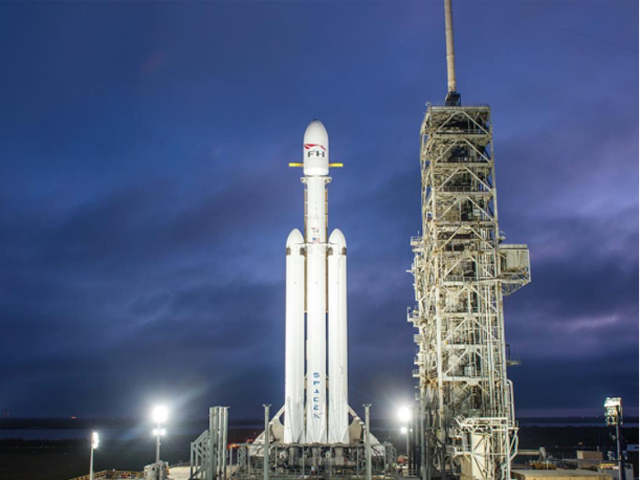
Powerful rocket, the Falcon Heavy

Powerful rocket, the Falcon Heavy

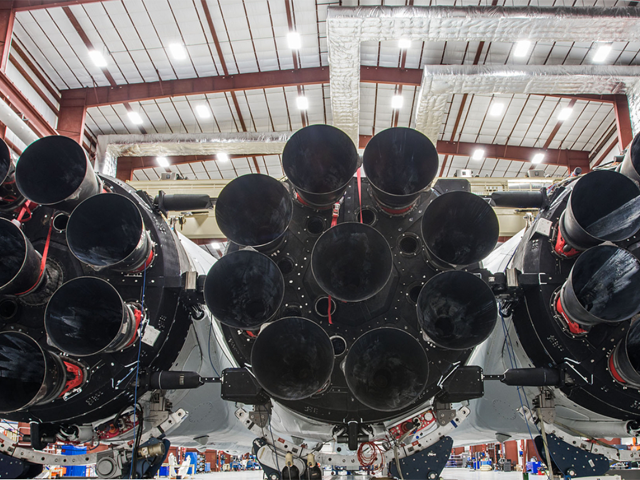
SpaceX's new, powerful rocket, the Falcon Heavy, is at its launch pad at NASA's Kennedy Space Center, awaiting an engine test-firing .The California-based company aims to launch the Heavy by month's end.

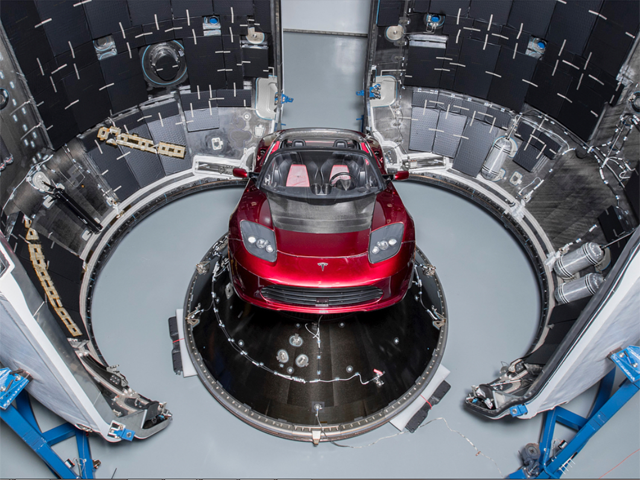
Rocket will carry a Tesla Roadster

Rocket will carry a Tesla Roadster

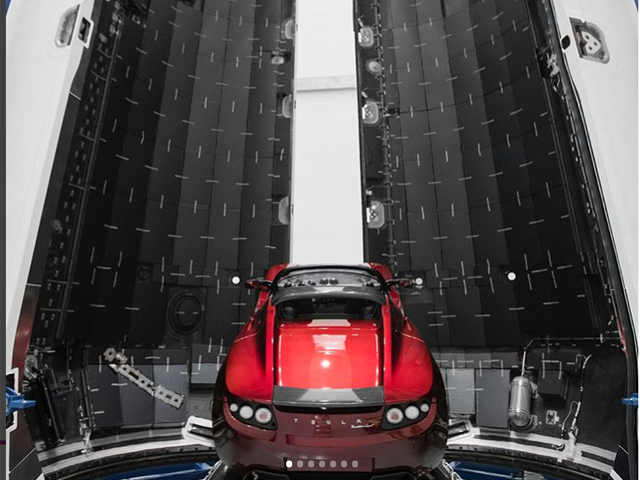
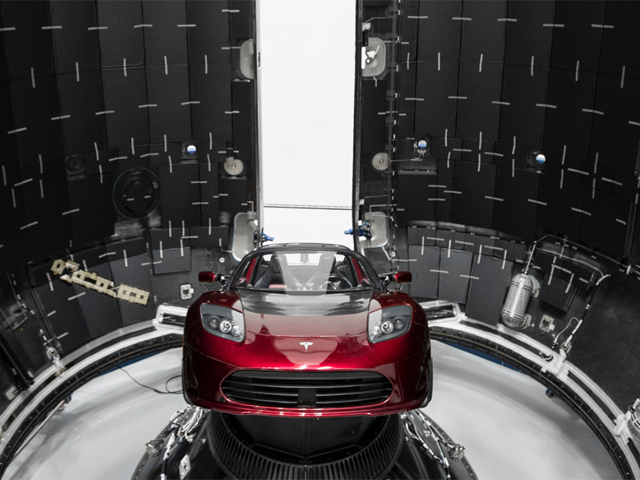
Elon Musk has announced that the first flight of his company's 'Falcon Heavy' rocket will carry a Tesla Roadster -- touted as the quickest car in the world with record-setting acceleration, range and performance -- into Martian orbit.

Musk's own personal property

Musk's own personal property

He has has repeatedly warned there's a good chance the new rocket could blow up, thus his own personal property will be aboard.
All-electric battery-powered, four-seater sports car

All-electric battery-powered, four-seater sports car

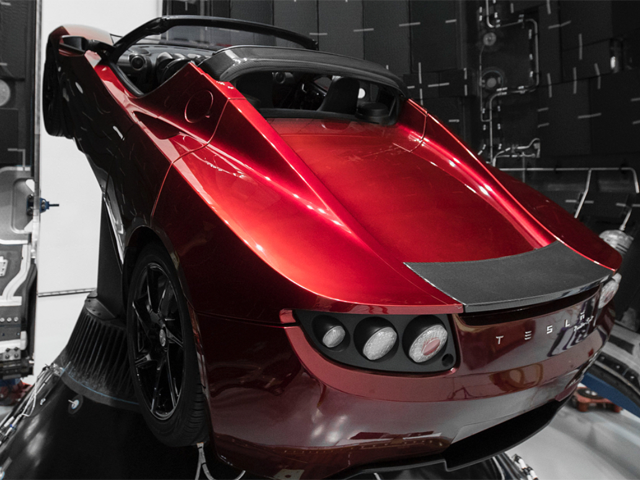
Tesla Roadster is an all-electric battery-powered, four-seater sports car prototype from Tesla.

The sports car with a removable glass roof is an updated version of Tesla’s first production vehicle. It can seat four and travel 620 miles (1,000 km) on a single charge.
Tesla Roadster into space

Tesla Roadster into space

The car, as it hurtles into space, will be playing a song by David Bowie on repeat.
One of the most powerful rocket

One of the most powerful rocket

At 2500 tons of thrust, equal to 18 Boeing 747 aircraft at full throttle, it will be one of the most powerful rocket in the world.The Falcon Heavy will have double the thrust of the next biggest rocket out there today, according to Musk. It is a more powerful rocket that SpaceX hopes to use for missions to the Moon and Mars.
Photo: elonmusk/Instagram

2018 Isuzu D-Max V-Cross With Updates has been Launched


Isuzu has launched a facelift for its D-Max V-Cross lifestyle pick-up truck at Rs 14.27 lakh, due to launch in 2018.
While retaining the same design language, the 2018 Isuzu D-Max V-Cross gets a host of exterior updates including LED DRLs instead of fog lamps, LED taillights and a redesigned tail-gate.
The higher-spec V-Cross High trim also gets chrome detailing on the rear bumper, LED daytime-running lights and LED tail-lamps.
On the inside, the standard D-Max V-Cross gets a new touchscreen audio system that doubles as the reversing camera.
Under the hood, the 2018 Isuzu D-Max V-Cross continues to get the 2.5-litre diesel engine that churns out  132 bhp of max power and 320 Nm of peak torque.

Lenovo Mirage Camera hands-on review


It’s never been easier to experience virtual reality, with the latest headsets not even forcing you to faff with your phone before diving into all manner of digital worlds.
So shouldn’t it be getting easier to create VR content, too? Google and Lenovo think so, and the Mirage Camera could be the piece of tech to do it.
The point-and-shoot camera made its debut at CES, and we made sure to try it out to see if we’ll soon be shooting our holiday snaps in a VR-friendly format.

First off, a disclaimer: this isn’t the kind of VR that completely envelops you in an experience. Instead of 360-degree clips and photos, the Mirage Camera captures a 180-degree, stereoscopic view of what’s in front of you - not behind.
Lenovo and Google say that’s because people tend to focus on what they can see, not what’s behind them. A 180-degree view lets you take in the whole scene, while cutting out the boring bits like the person behind the camera pressing the shutter button.
This also means the sensors aren’t working overtime to capture an entire scene, only a part of it. As a result, the Mirage captures and impressive amount of detail in each photo or clip. Certain scenes give a better impression of depth, but the demo clips we saw had excellent clarity.
Actually taking photos should be quick, with no video preview to render on the device itself. Just point, shoot and save.
The Mirage uses two 13MP sensors with 180-degree fisheye lenses, which are good for stereoscopic stills that give the impression of depth once you’ve pulled on a pair of VR goggles, or 4K video at 30fps.
Aside from the funky dual lenses, the camera looks deceptively simple, with no viewfinder and barely any buttons. You get a power button, shutter button, and a function key that flips between stills, video and live streaming to YouTube if you’re hooked in to a Wi-Fi network. Lenovo is working on a version with built-in 4G, too, for go-anywhere sharing.
There’s a 1/4in tripod thread at the bottom, so you can set it up and get in the shot yourself, with iOS and Android smart controls letting you shoot remotely. These apps also let you view back your footage on the small screen, before you pop on a VR headset.
You can save files locally on 16GB of on-board storage, or to a microSD card. USB-C charging is a welcome 2018 addition, and the battery should be good for two hours of shooting between top-ups.
Upload directly to Google Photos or YouTube, and it’ll automatically adjust the image if you’re viewing on a traditional screen, rather than in VR. Most video editing software should support Google’s VR180 file format if you upload to a PC, too, so you can get more creative with your clips.
Are you really missing out if your VR photos only capture half of your surroundings? Lenovo and Google say no, but the Mirage Camera will be the bit of kit to actually test the theory.
It seems simple enough to use, and image quality does seem to be very good, even at this early, non-final hardware stage. Lenovo hasn’t quite worked out a price yet, only saying it’ll set you back “less than US$300 (RM1200)” when it arrives in the summer, but you’ll also need to factor in the VR headset you’ll be watching your footage back on.
Considering you can already pick up plenty of full 360-degree cameras for a similar amount, whether the Mirage is a must-buy or not will depend on Google’s Daydream VR initiative ramping up to cover a lot more phones and devices.
We’ll know if it has done enough later in the year, when we give the Mirage Camera a full review.

Thursday, January 11, 2018

Tripura Poll: Cast your Vote here

ISRO launches its 100th satellite, calls it new year gift to country

Setting a benchmark today, the ISRO launched its 100th satellite along-with 30 others in a single mission.
In a milestone event in the country's space history, the Indian Space Research Organisation (ISRO) today launched its 100th satellite along-with 30 others in a single mission.
All 31 satellites were launched from a Polar Satellite Launch Vehicle (PSLV) off the Satish Dhawan Space Centre at Sriharikota, about 100 kms from Chennai.
Speaking after the success of the PSLV launch, AS Kiran, outgoing Chairman of ISRO said, "During the launch last year, we had problem. But this launch proves that all problems were addressed and rectified. Happy to give this new year gift to the country."
Out of the 31, three are Indian and 28 are from six countries: Canada, Finland, France, South Korea, UK and the US.
The first space mission in 2018 onboard the PSLV-C40 comes four months after a similar launch failed to deliver the country's eighth navigation satellite in the earth's lower orbit on August 31, 2017.

Wednesday, January 10, 2018

Lamborghini Urus SUV India Launch Live Updates: Images, Specifications, Features

The Lamborghini Urus is the fastest SUV in the world right now with a top speed of 305 kmph
Italian Supercar maker Lamborghini is all set to launch the much-awaited Urus SUV in India today. The new Lamborghini Urus is the first SUV to come out with the mark of the raging bull, which alone makes it quite a special launch. And we'll be bringing you all the live updates from the launch event here. The Urus is also one of few products that Lamborghini has launched in India within such a short period from its global debut, which happened a little over a month ago on December 4, 2017. And we were the first ones to tell you about it.
Unlike all the Lamborghinis we have seen so far, the Urus is a different breed altogether and distinguishes itself as a slightly practical car that is less demanding in its seating, can seat five and can be taken on broken tarmac as well without much thinking. But there's a lot more that's on offer when it comes to the Urus and we have already told you all there is to know about Lamborghini's SUV.